

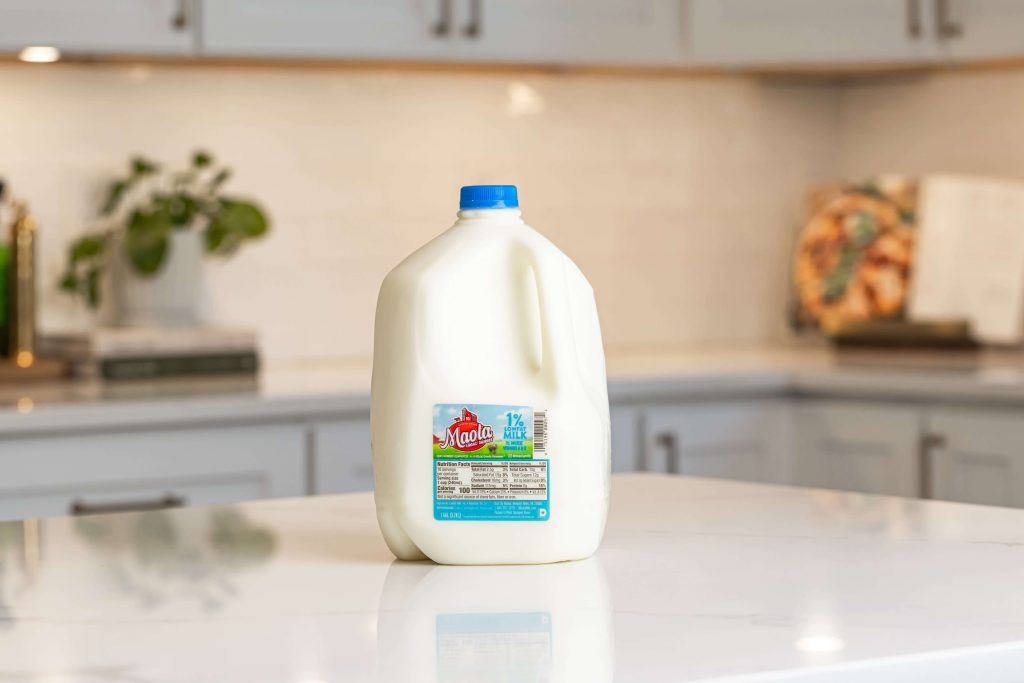
1% Lowfat Milk

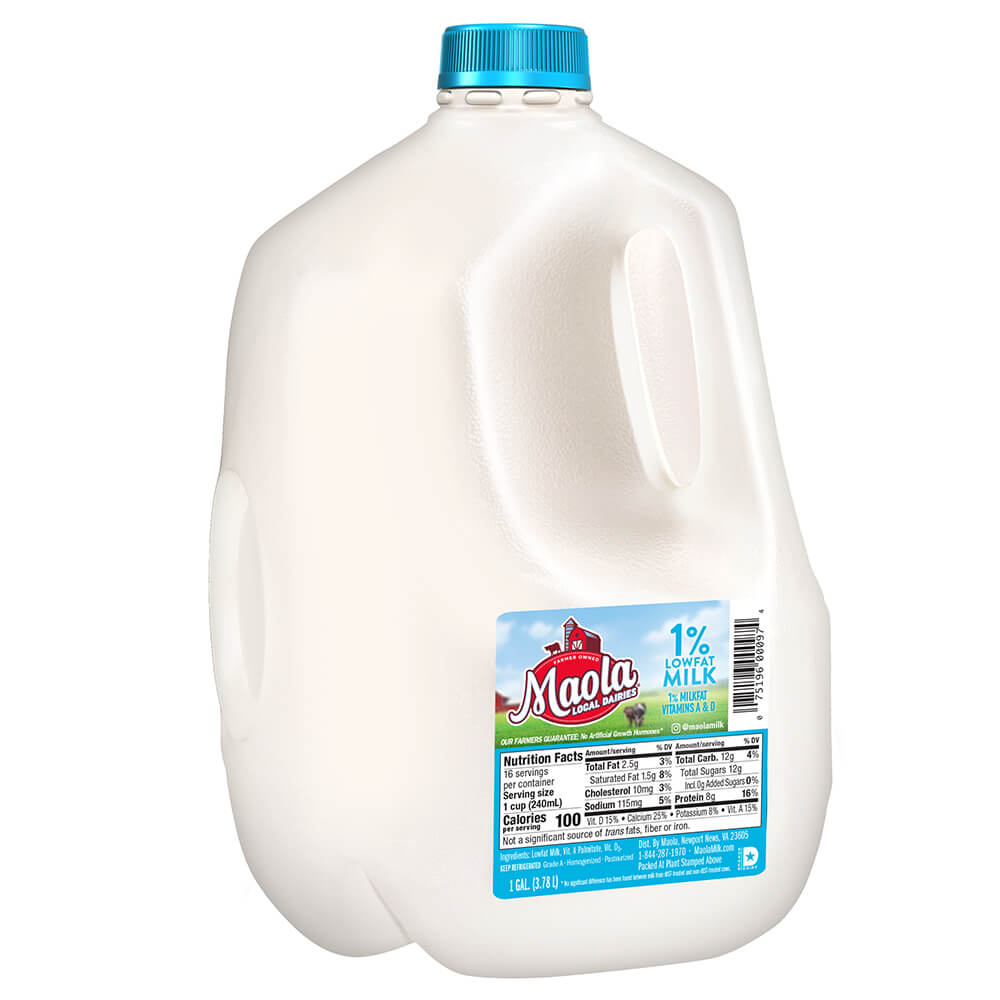
Maola 1% Lowfat Milk has half the fat of 2% milk, but gives you the same creamy and delicious dairy nutrition that you can trust from Maola. You can enjoy a refreshing glass of Maola 1% Lowfat Milk on its own, blend it into a smoothie – you name it! With 8 grams of high-quality protein and 13 essential nutrients, Maola 1% Lowfat Milk is a kitchen staple.

At Maola, we bring you local, sustainable milk and dairy products that have been nourishing communities since 1920. As a family farmer-owned cooperative, we’re committed to producing fresh, nutritious dairy with a focus on sustainability and community. From our farms to our processing plants, every step is handled with care to make sure your milk is fresh from farm to fridge—so you can feel good about putting Maola 1% Lowfat Milk in your cart.
Nutrition Facts

Nutrition

Serving Size = 1 cup (240mL)
  • 8g
    Protein
    16% of daily value
  • 300mg
    Calcium
    25% of daily value
  • 12g
    Carbs
    4% of daily value
  • 2.5g
    Fat
    3% of daily value

Ingredients:

Lowfat Milk, Vitamin A Palmitate, Vitamin D3
Contains: Milk

All About 1% Lowfat Milk

As the name implies, 1% milk is lowfat milk, but this percentage refers to the fat content of the milk. 1% means that the milk contains approximately 1% milk fat by weight.

1% milk is a lowfat milk, but it still contains 13 vital nutrients for health, such as protein, carbohydrates, calcium, potassium, and vitamin D.

The main difference between 1% and 2% milk lies in the fat content. 1% milk refers to milk that contains around 1% milk fat by weight. This reduced fat content gives 1% milk a lighter consistency and less caloric density. 2% milk, on the other hand, contains 2% milk fat by weight. It’s creamer and richer in taste and texture.

While the two types of milk differ slightly in taste, texture, and caloric density, both 1% and 2% milk are considered lowfat milk options. They are both naturally gluten-free, and an excellent source of calcium, protein, riboflavin, and essential minerals like phosphorus and potassium. Most people make their choice between the two based on either dietary needs or personal taste preferences.

The main difference between 1% and whole milk, or full-fat milk, lies in the fat content. 1% milk contains about 1% milk fat by weight, whereas whole milk contains about 3.25% milk fat by weight. 1% milk generally has a lighter consistency, and is an excellent choice for those who want to reduce their fat intake while still getting the essential vitamins and minerals found in milk.

Whole milk is called such because it’s unaltered compared to other types of milk, having no fat removed during processing. Whole milk has a richer and creamier taste than 1% milk, and is more calorically dense. The fat gives a fuller and more satisfying flavor, which makes it a great option for cooking and baking.

Yes, 1% milk can be a healthy choice for many, depending on their health goals and individual dietary needs. 1% milk contains 13 essential nutrients, including calcium, protein, vitamin D, and vitamin B12, which are important for healthy bones, teeth, and muscles.

1% also has a lower fat content than 2% or whole milk, so those aiming to manage their fat intake for either disease management or weight management may prefer this type of milk for that reason. Of course, it’s always important to consult a dietician before making this choice.

EXPLORE MORE MAOLA Products